In the beginning
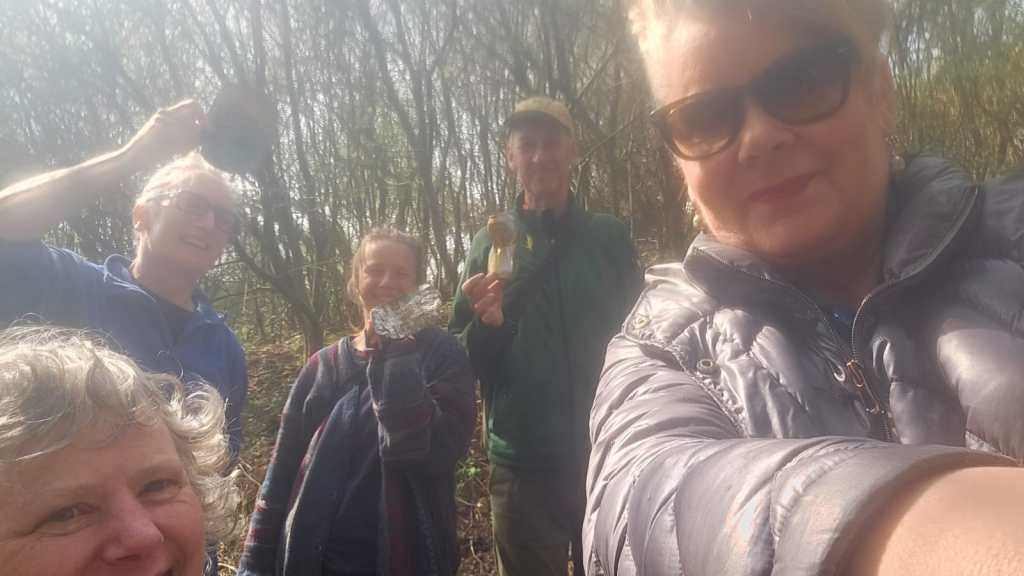
On a sunny Sunday morning with still a chill in the air we met – 5 of us – James, Maria, Caroline, Jenny and I – in the shopping centre car park. We find the Glen river running parallel to the North ring road at the shopping centre’s southern perimeter. We are standing in the site of the proposed market garden. The planning permission was successfully overturned here due to the wild habitat of the otter (thanks Chris Moody) – ‘you can’t argue with otters’ Jenny quotes one of the entrepreneurs and points out also that though a market garden may be a the step in the right direction, we can’t turn one of the cities remaining wild green pockets into an economic one in the name of sustainability.
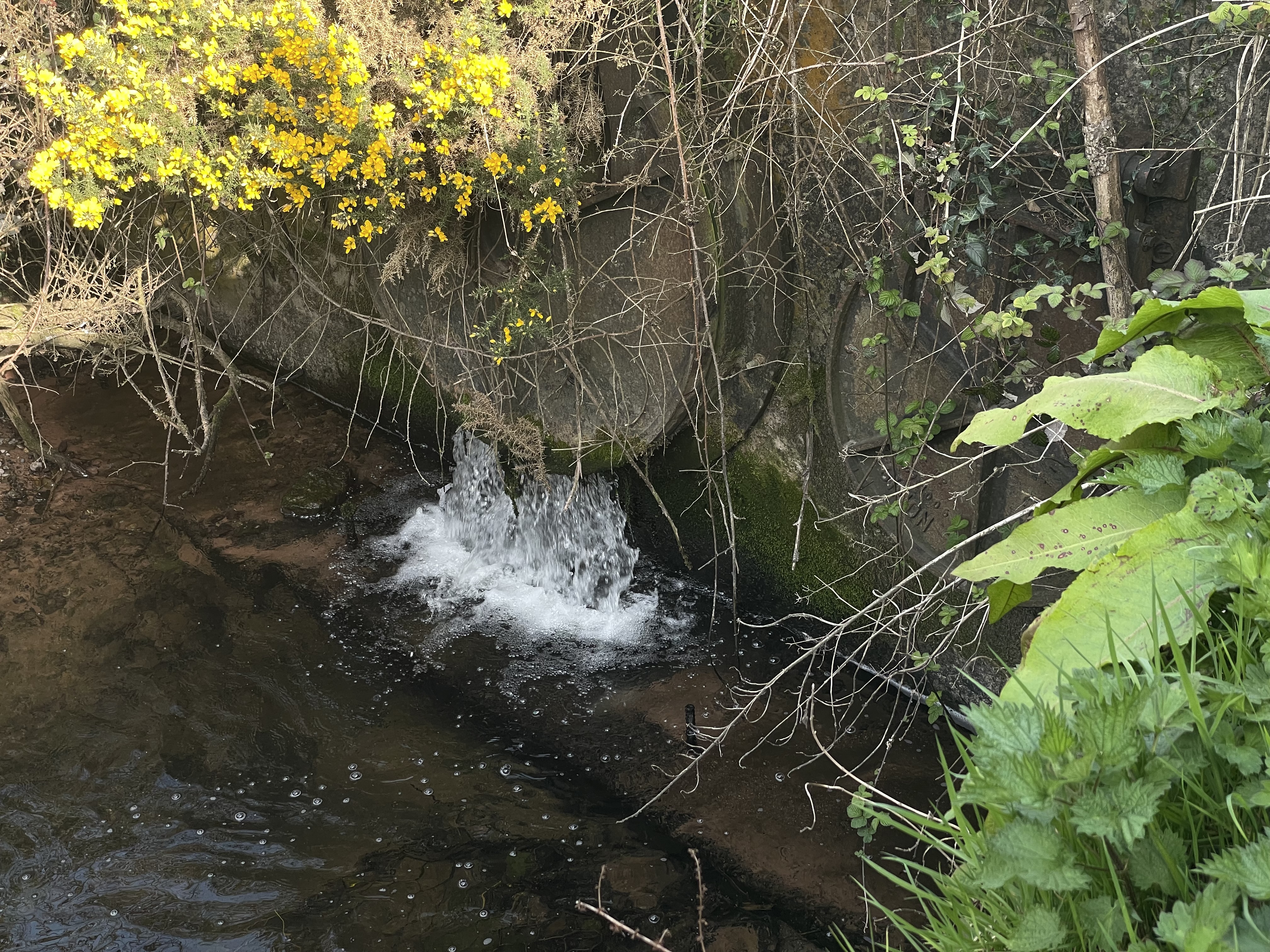
With these urban thoughts very much floating we head to the bridge where the Glen passes under the road and an unnamed tributary flows into its waters. The tributary arrives from the north passed the new housing developments and entered the Glen here by one of two large manhole covers. I remember the findings of Simon Harrison’s report that found this water to be in fairly good health, and that by joining with the river here it refreshes the Glen water that has gathered all kinds of effluent along its westerly path.
Looking down we see a tricycle and some chain link fencing drowning here. The trees bordering the road are in blossom, their white flowers still held in the branches, they survive among the stumps where companion trees were felled in advance of the planning permission for the failed market garden.
Moving up the Glen
The Glen river is abundant with willows of many varieties and by following the willows we will be following the river. Pylons and poles with their overhead cables also follow the river valley. There are small wildernesses still to be found in spots along the river’s course and the wild tangle prevents us from entering.
We move further along the Banduff road where we manage to find entry to the river’s path through a ramshackle gate. This is a field where horses are sometimes kept. It is one of the fields that has been infilled with building rubble that was dumped here from the development of Merchants Quay in the 1980s. The area has been reclaimed by hawthorn and hazel, and the arching brambles which harbour more tender shoots – it is easy to see how, if left alone, the place could once again revert to woodland.
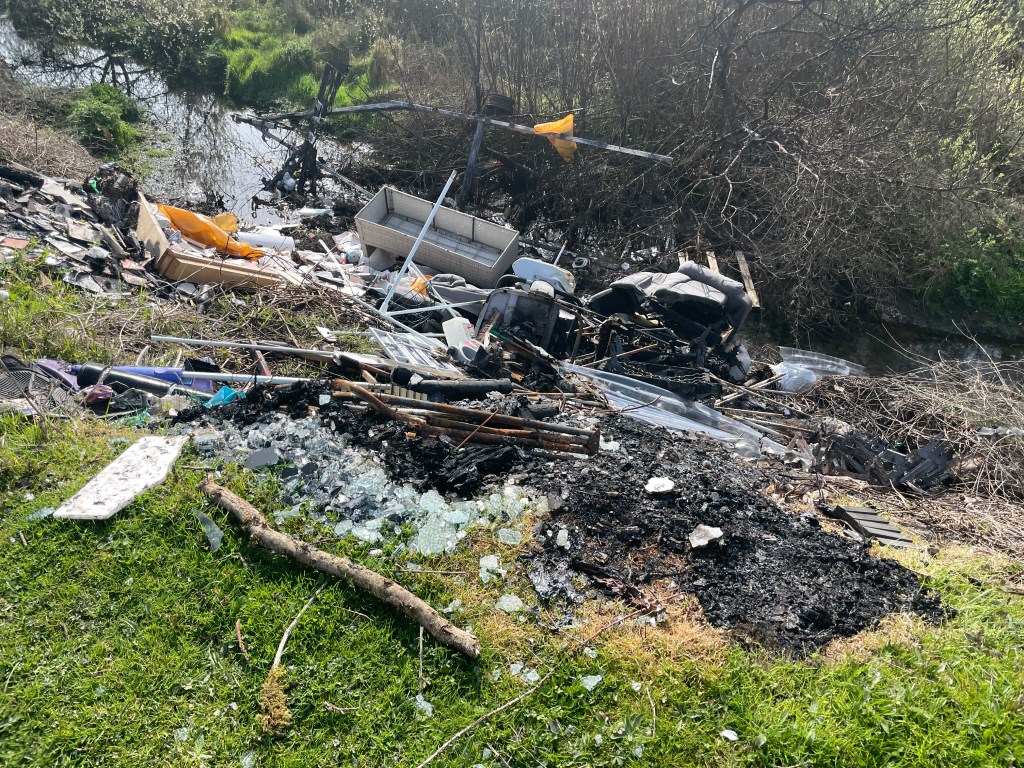
However, there is new disturbance here, and we follow the tracks to a pile of what seems to be the entire contents of a house, a heap and tangle of tiles and springs, old sofas and chairs, there is a toilet bowl and possibly buried beneath even the kitchen sink, – the disemboweled house must have had a large lawn judging by the size of the mower resting amongst the debris. Even the trailer that brought them here has been abandoned in this cascade.
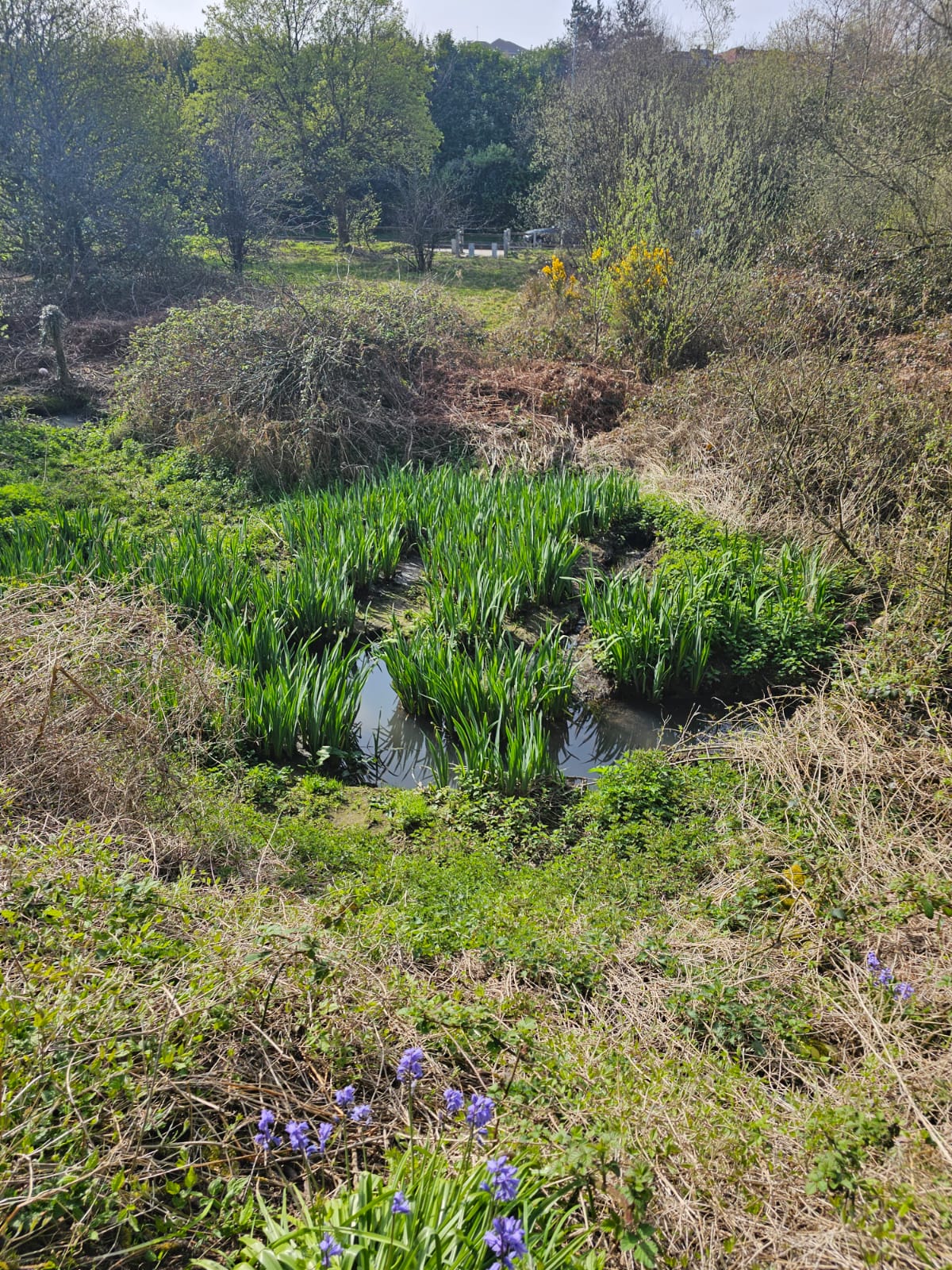
We stand on this more cultivated bank of the river – looking over to the other side of dense bush, gorse, willows, rushes, irises, hummocks of grass all thriving in the wetland of the river plain – that side is the bank where the birdsong is emanating from.
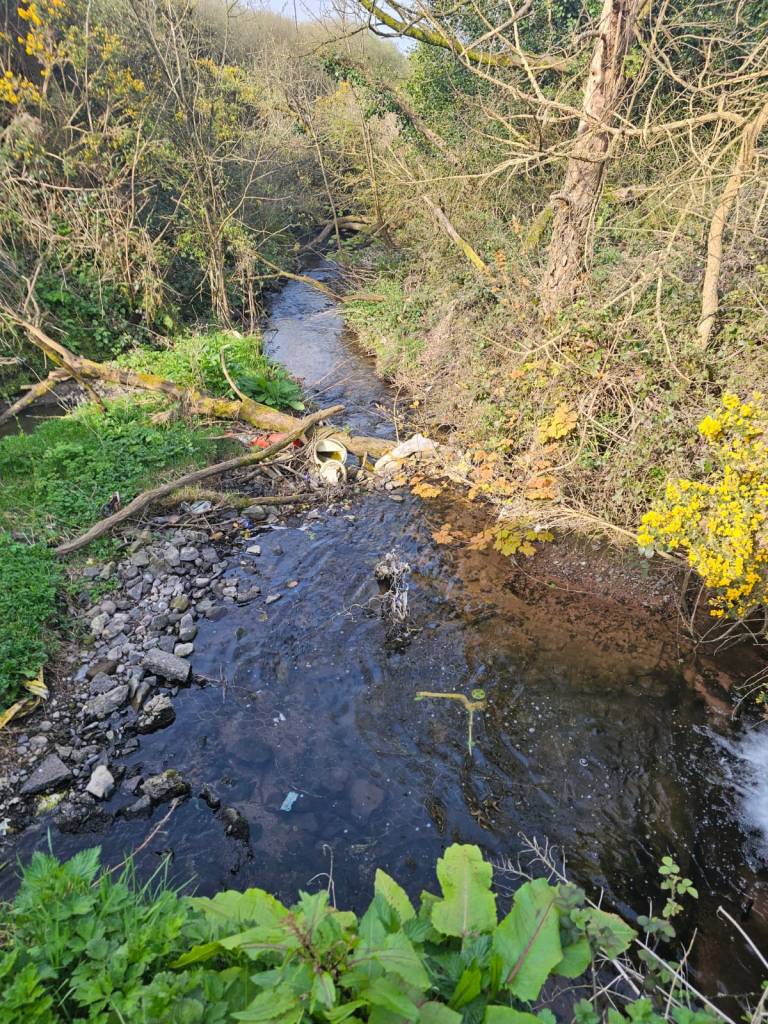
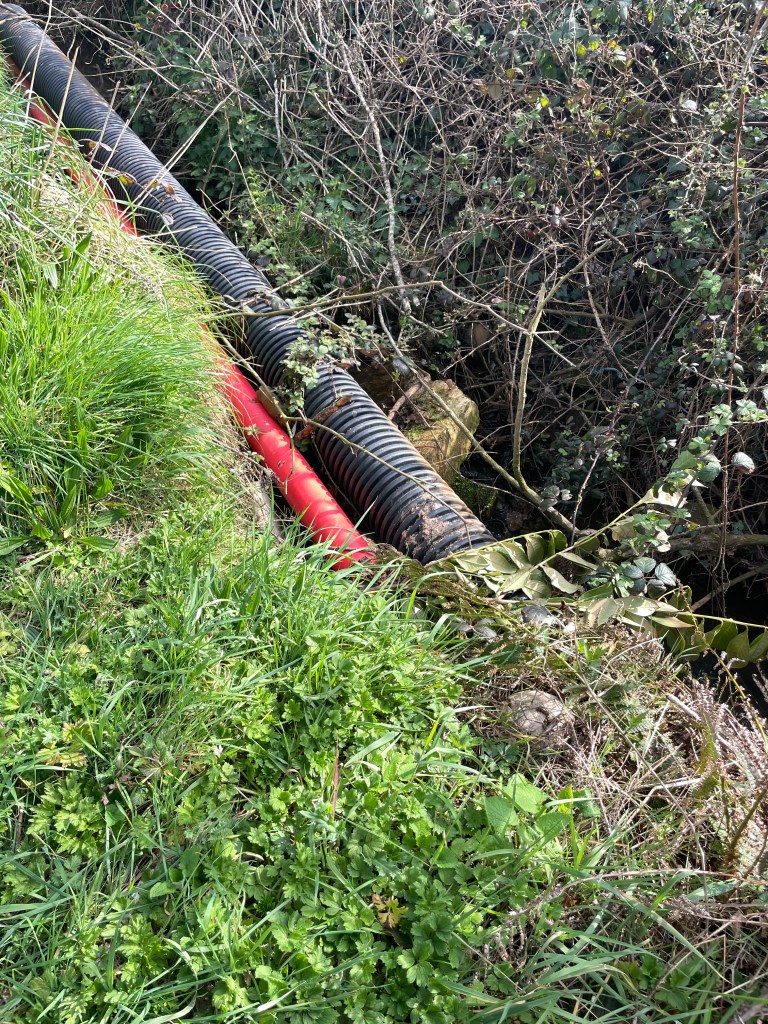
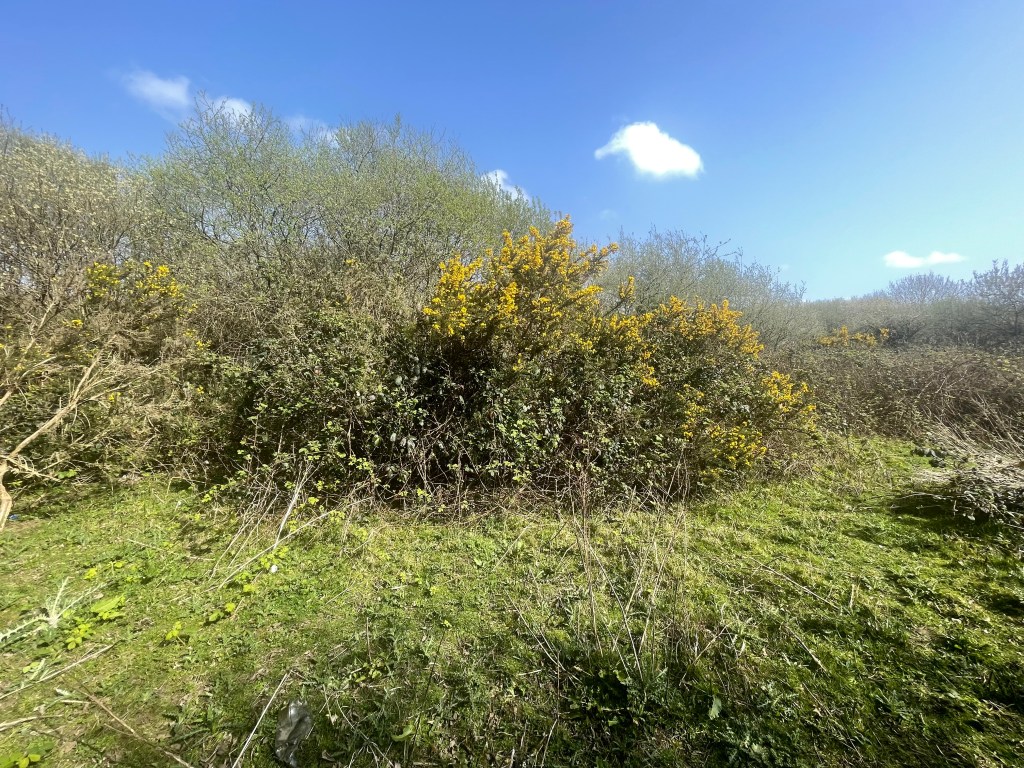
We walk on through the branches of self seeded trees, over the topography of vintage builders rubble – its a kind of fairyland now that it is blanketed over with mosses and there are pretty nooks of primroses and burdock. Passing through this area we emerge onto a large lawn and find we are in the netherlands of a row of houses. The Glen runs alongside, it is lively but somehow abject, and it’s curious as ever to note how urban dwellers turn their backs to the river.
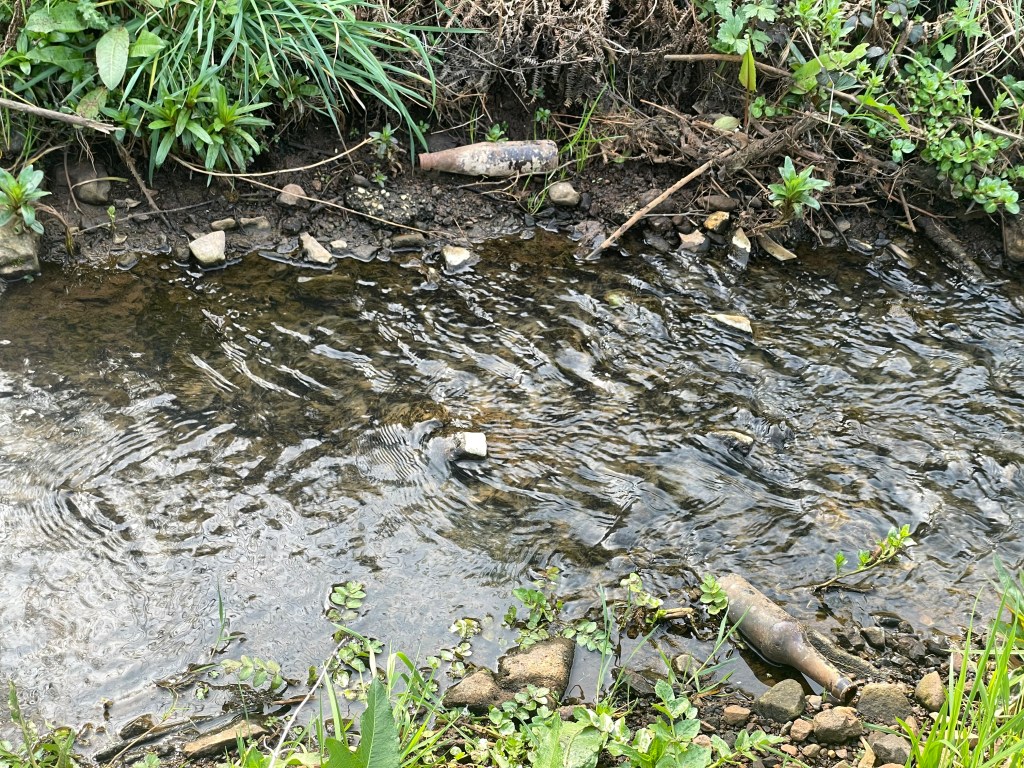
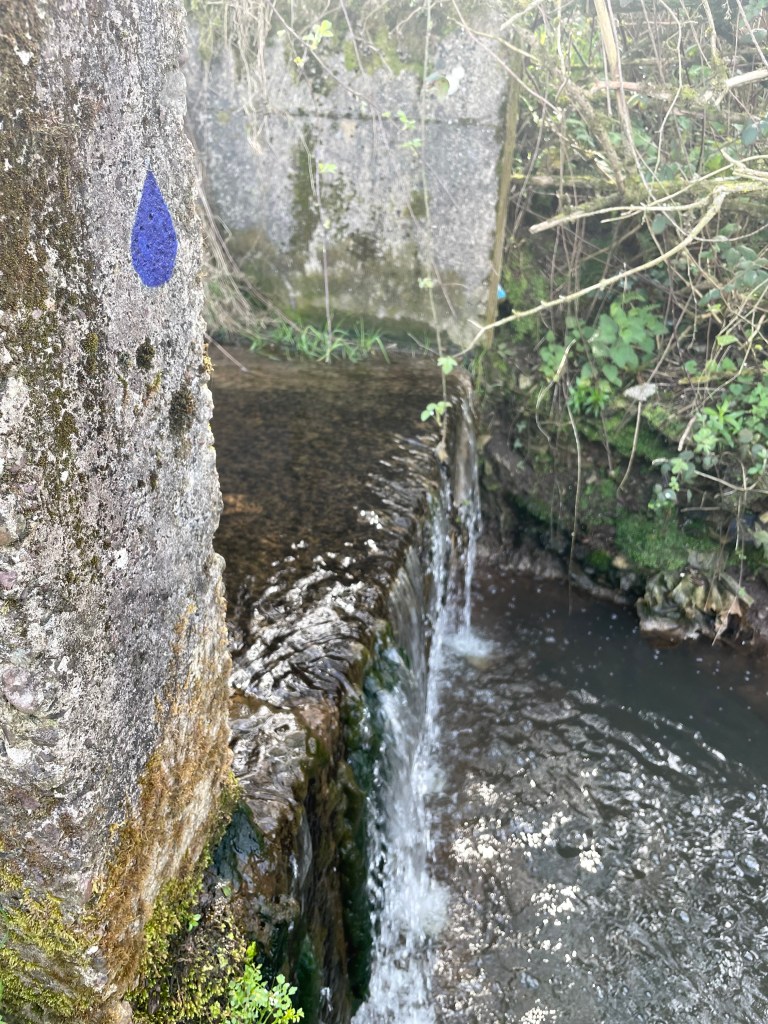
Here there is another concreted section of the river, there is a caged culvert that drops down, creating a change in water levels. Here there seems to be something unsavoury entering the water judging by the milky opaque look and the smell of it, On the riverbed there are some odd stones with white tips showing above the water level – might this be some indication of pollution I ask the others, Jenny remembers the last time we came this way, when the river was full of dumped white paint – the stones still bear witness to that event one year on.
While we are talking I catch sight of a blue water droplet painted on the cement, this is an element of the project the tears of the river, where artist, Elinor Rivers painted the blue tears in recognition of a river which is suffering.
On to Tinkers Cross
We are now on the site of the new park at Tinkers cross. It has been levelled and with its freshly tarmac-ed paths it looks more like a race track than a nature reserve. There are people using the paths, they are shielded from the river by thickets of hawthorn. We attended a public consultation here about this new park less than a year ago- its plain to see that some things get done fast when it involves tarmac.
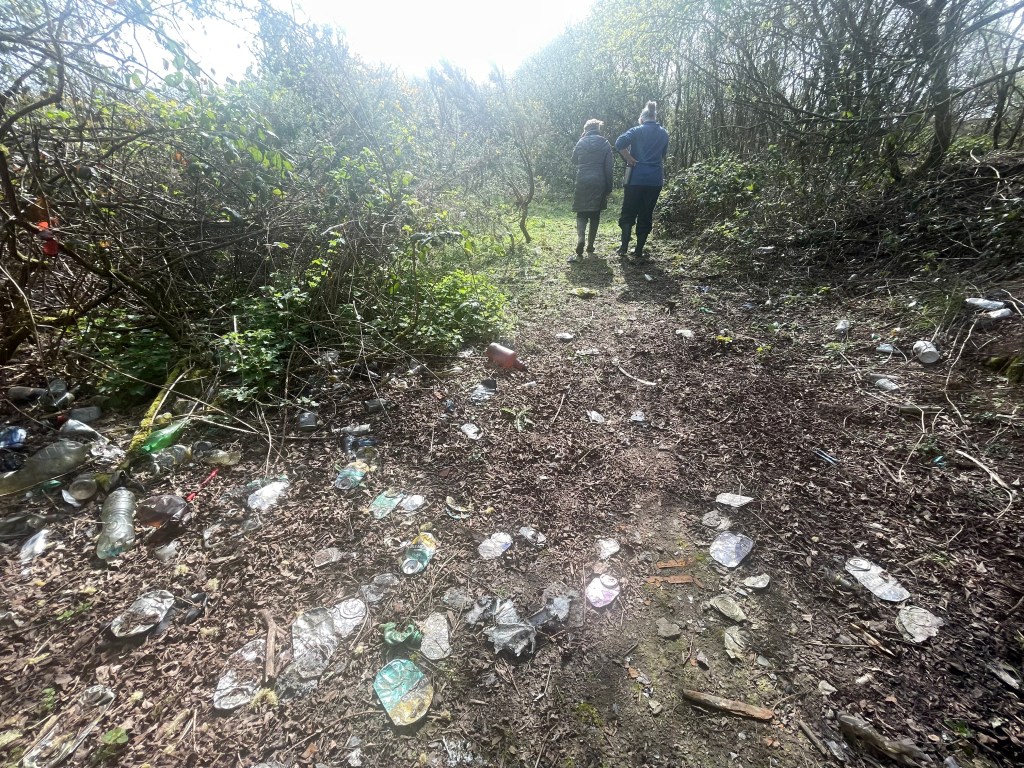
We cross the road again to catch up with the river on the other side. This time we go into the scrubland where drinking parties once took place, there are areas that are almost paved with cans, none of them look recent, Jenny wonders if the drinkers have now disappeared into their phones. Optimistically one could say that these parties are evidence of a call of the wild, to be out of the urban jungle and into a greener, wilder one. ‘They might have taken their rubbish with them’ says Maria optimistically. The growth is much denser here and we lose track of the river. I have scrambled through and I can see the gully of willows that shows the river’s wetland course.
Final Observation
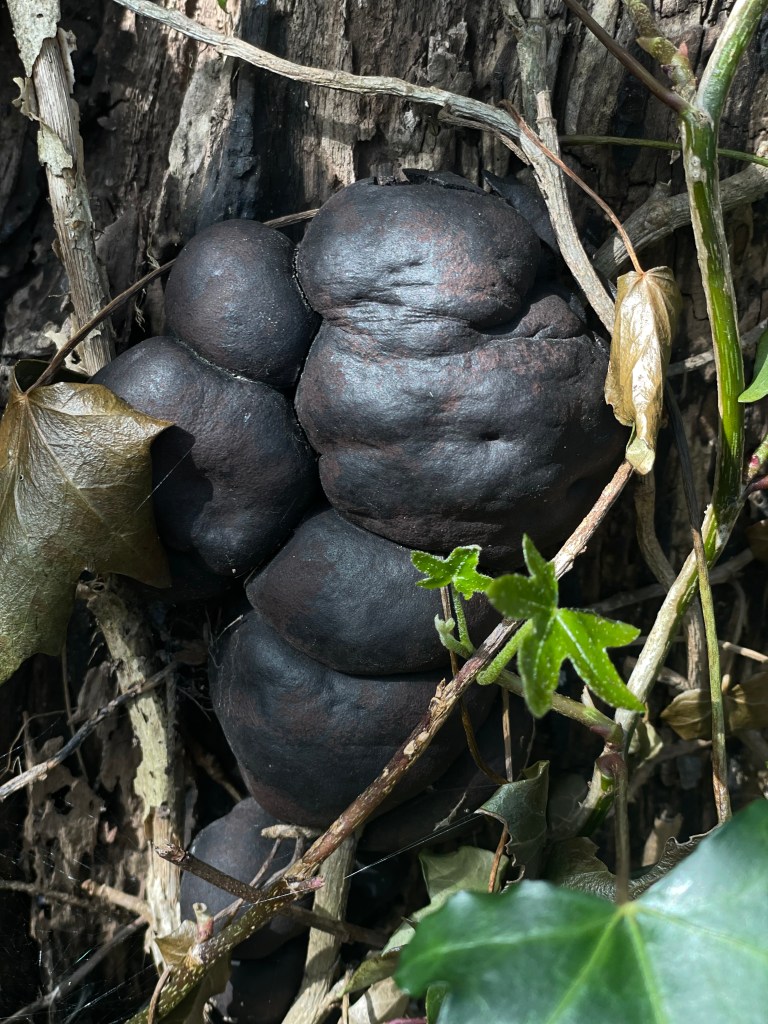
On the way home we passed a tree with bubonic looking growths, I thought the tree may have been hit by lightening and burnt the fungi but found instead they are King Alfred’s cakes.
https://www.woodlandtrust.org.uk/trees-woods-and-wildlife/fungi-and-lichens/king-alfreds-cakes/
 Cork River Alliance Group